1&1 / United Internet
Multi-brand design governance for Europe's largest email ecosystem
Process
The ecosystem
During my 14 years at United Internet's Munich Design & Production unit, I was responsible for six consumer brands under one corporate umbrella: GMX, the news and entertainment portal of WEB.DE, mail.com, GMX International, Auto-Service, and top.de. Each brand served a different market segment, from Germany's most-used email service (GMX, 30M+ users) to content portals and international markets. The challenge: maintain distinct brand identities while sharing technology, patterns, and quality standards across all products.
As Head of UX/UI, I built and led the design practice that governed this multi-brand portfolio from the ground up.
Shared platform, distinct brands
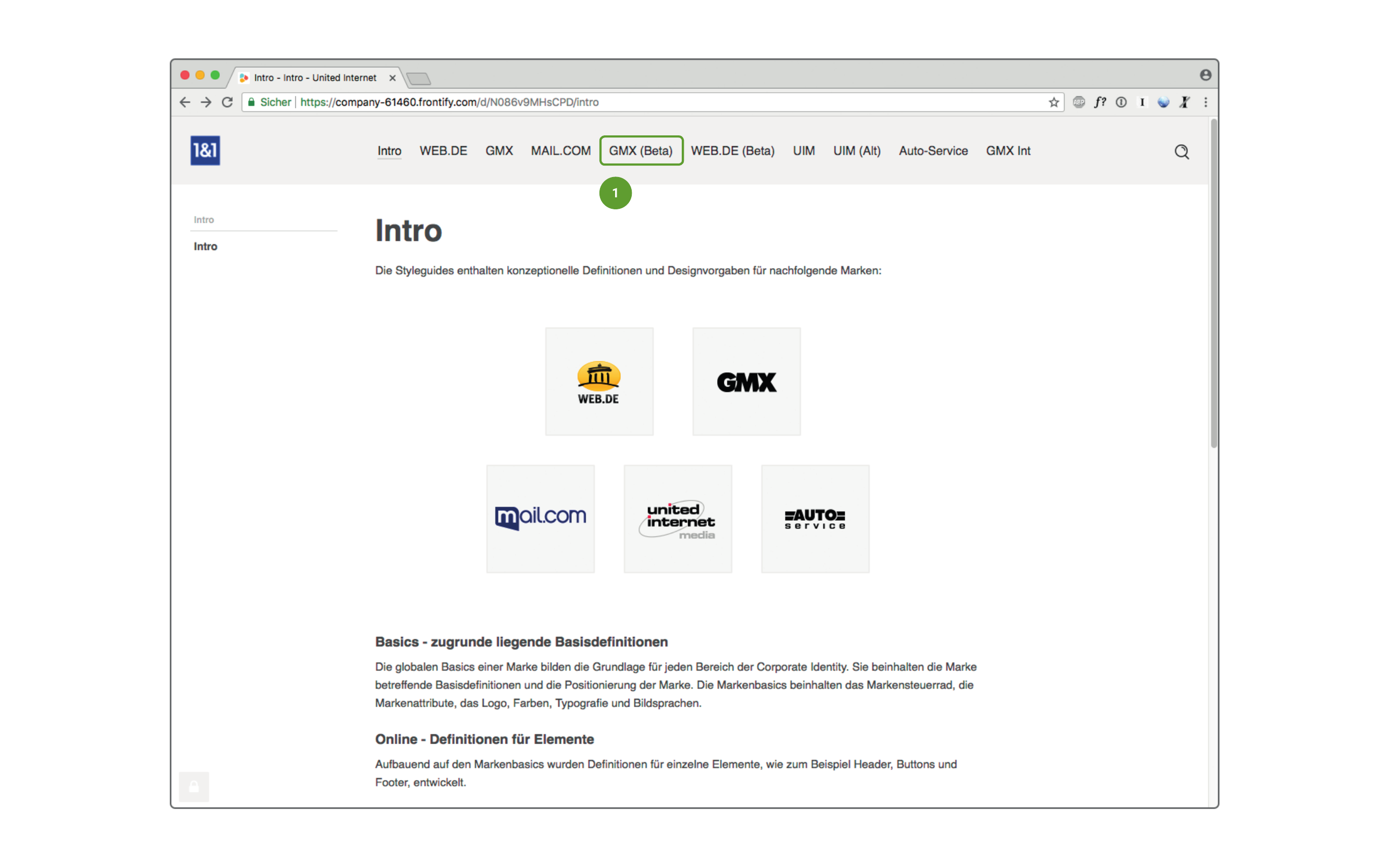
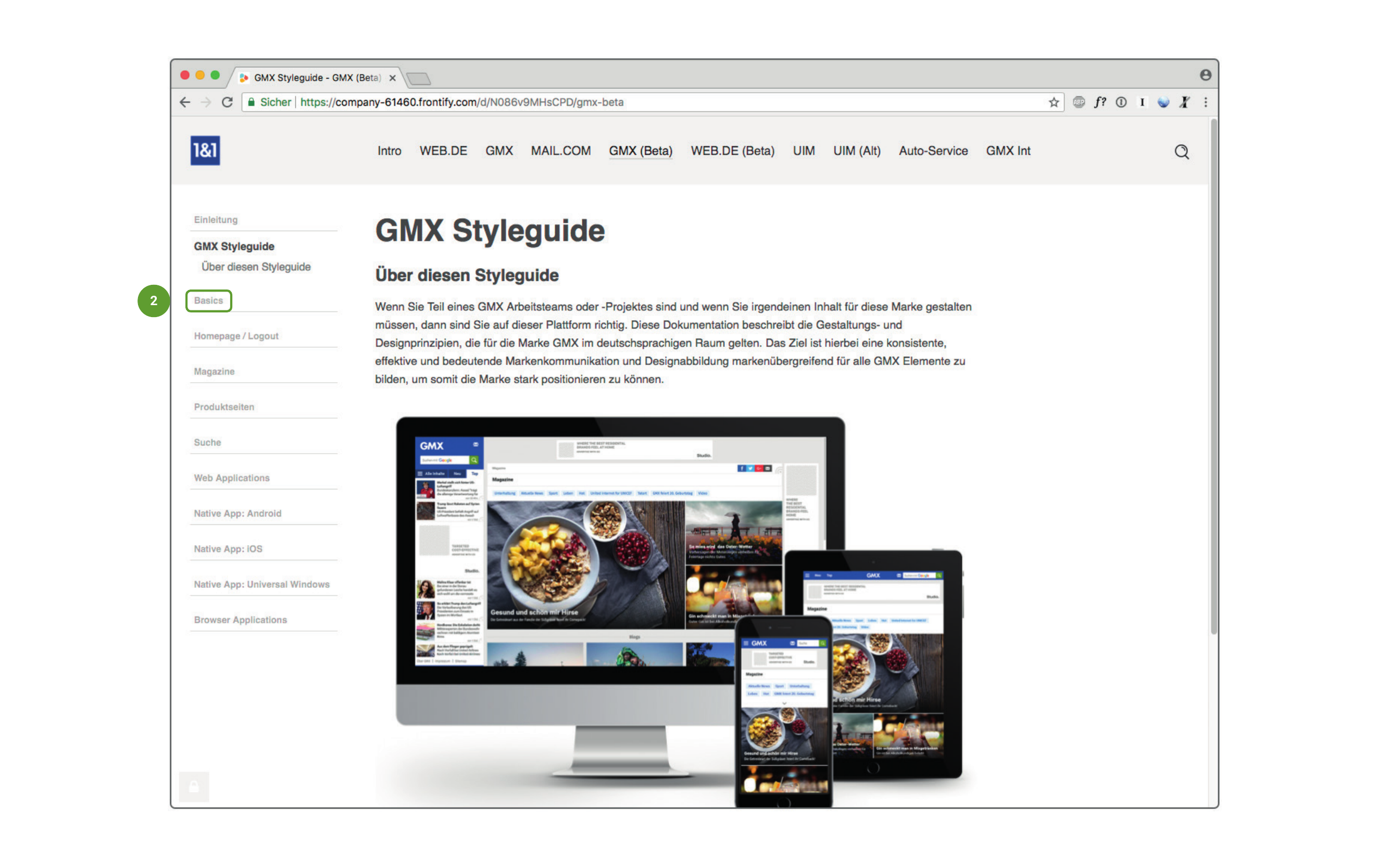
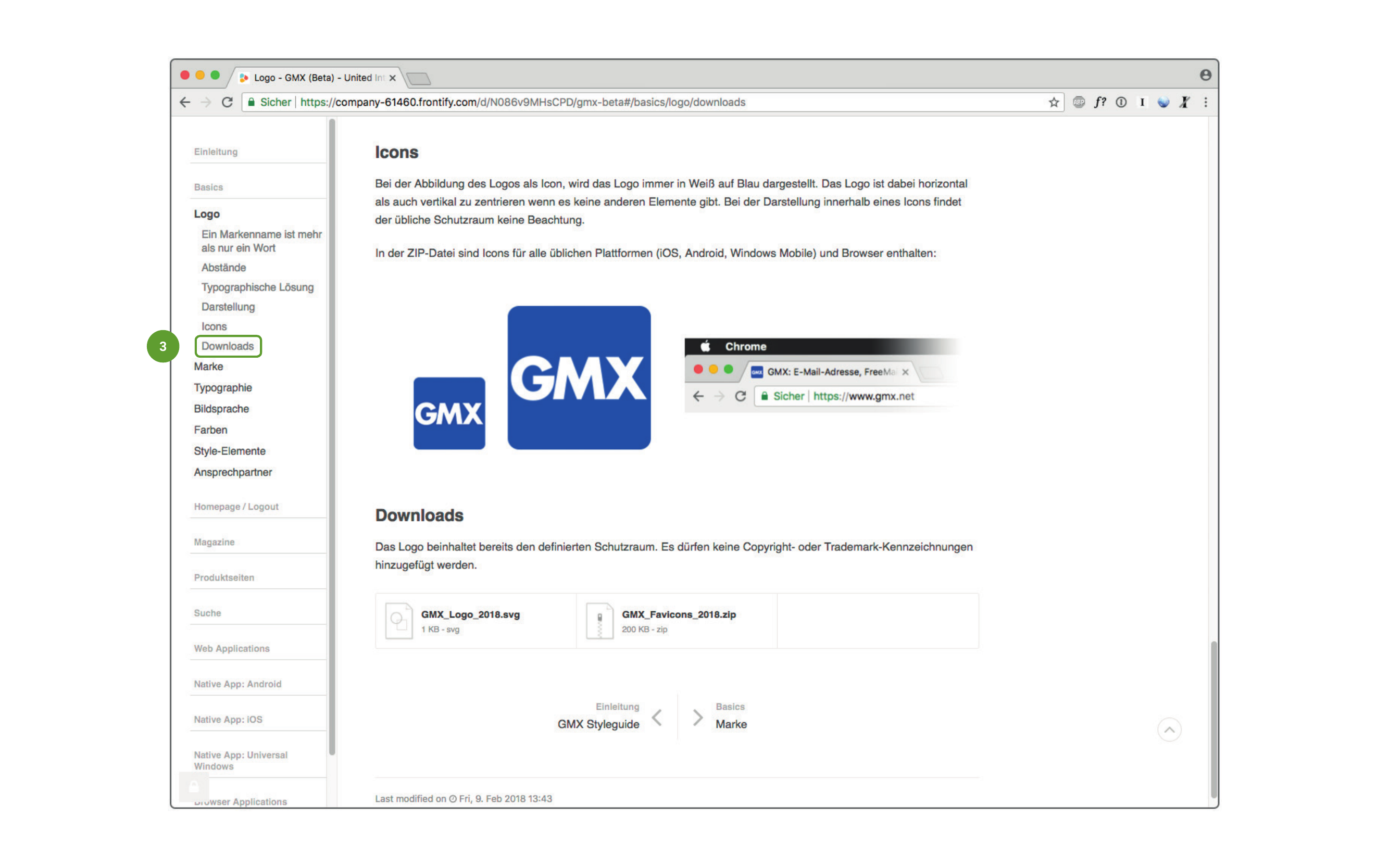
The core of our governance model was a centralized Frontify instance hosting all brand guidelines. Every brand had its own styleguide covering logo usage, color systems, typography, iconography, responsive layouts, and component specifications. The shared platform ensured consistency in structure and documentation quality while allowing each brand to express its own visual identity.
This approach let us onboard new team members quickly, coordinate across distributed teams, and maintain quality at scale without slowing down individual product teams.
Brand expression at scale
We built a complete design language for each brand: logo specifications and download assets, a defined color system, typography stacks with web font integration, custom icon sets, responsive breakpoints and grid systems, teaser and component formats, and button styles. The GMX styleguide alone covered web applications, native apps for iOS and Android, and browser extensions.
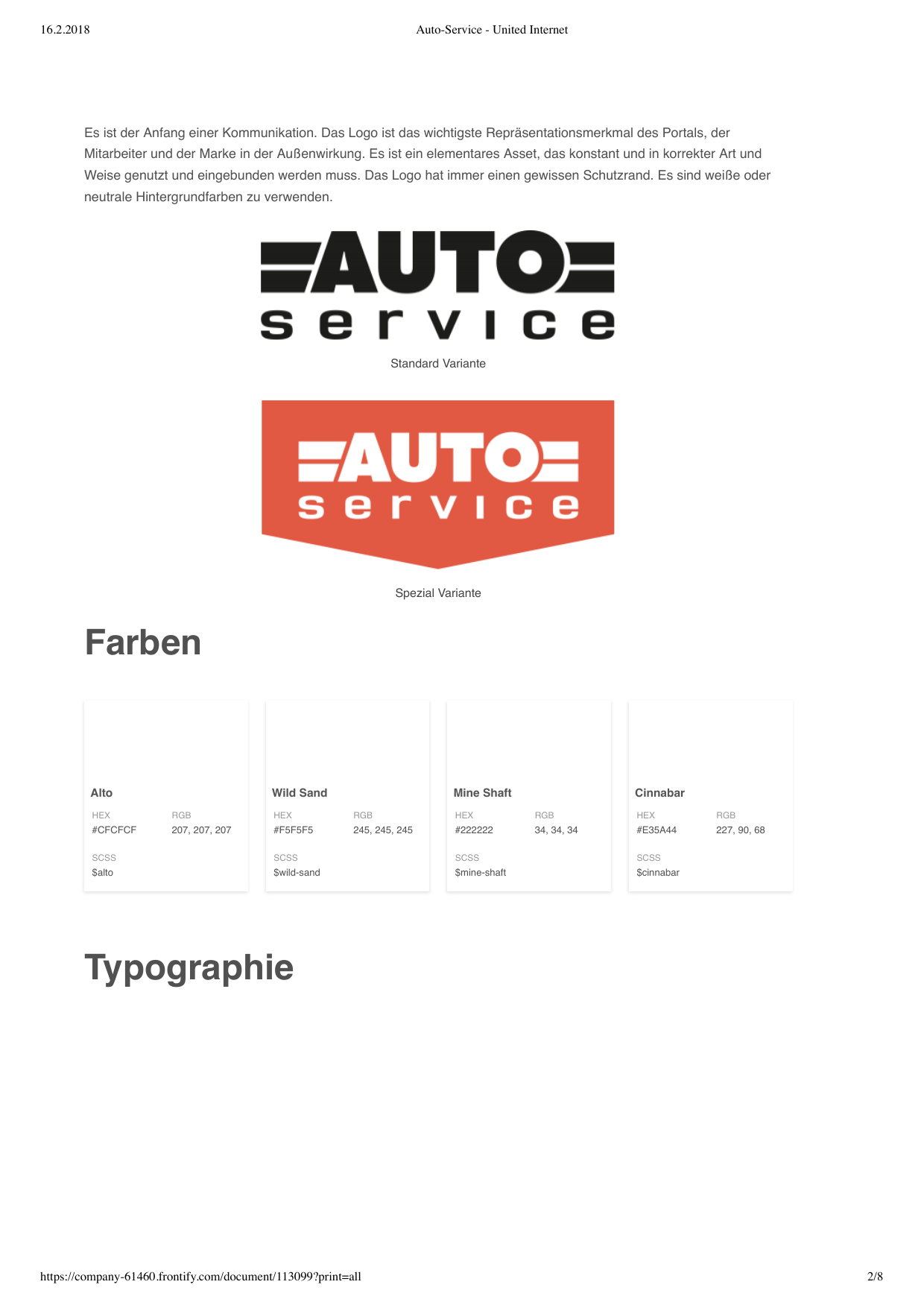
For auto-service.de, for example, the styleguide defined everything from logo variants and a four-color palette (including the signature Cinnabar red) through Open Sans typography in eight weights to a fluid responsive layout with three breakpoints and four teaser formats.
Cross-platform consistency
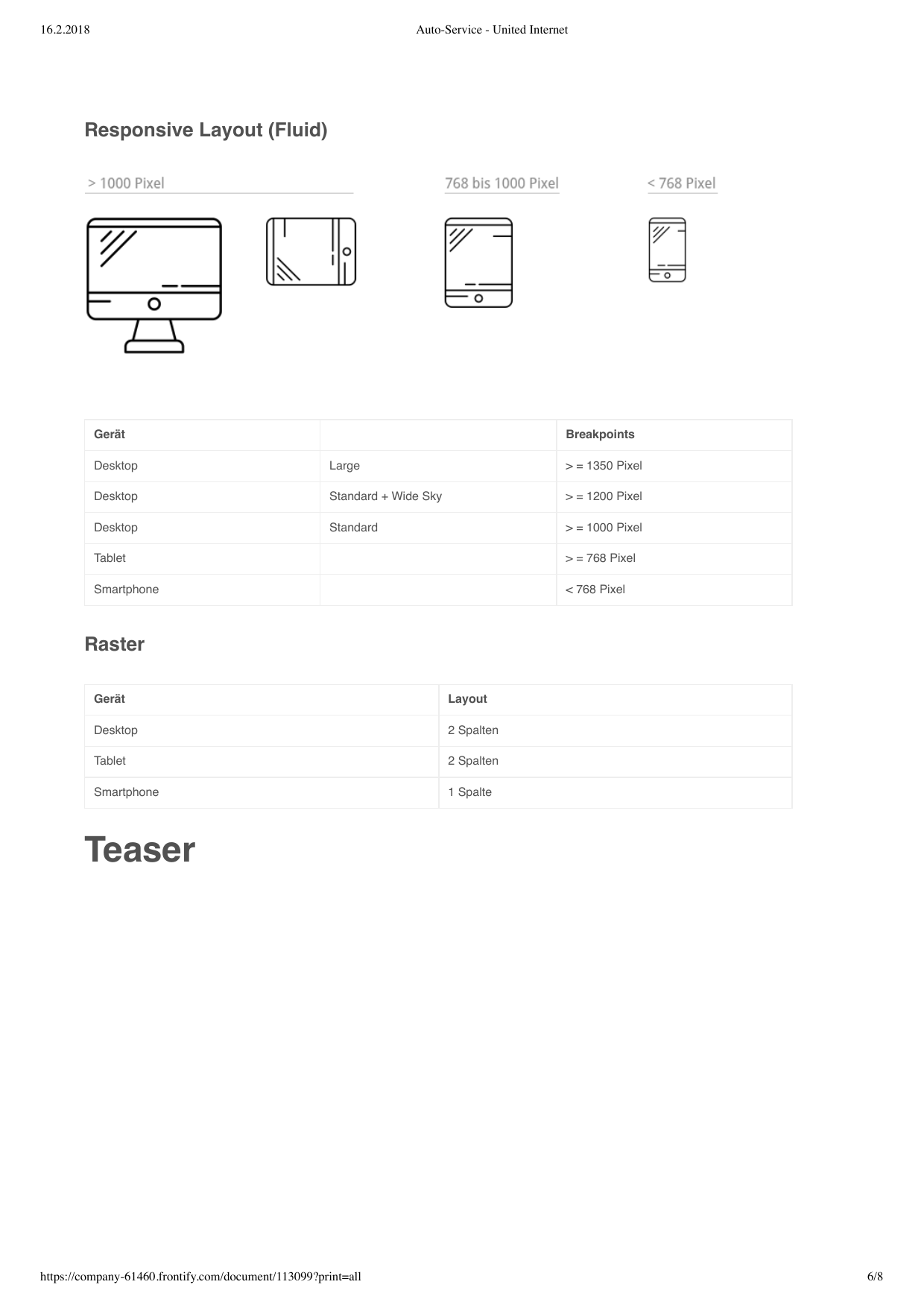
Each brand shipped across web, mobile web, native iOS, native Android, and browser extensions. The design system had to work everywhere. We built fluid responsive layouts with defined breakpoints, grid systems that scaled from 3-column desktop to single-column mobile, and icon fonts for pixel-perfect rendering across platforms.
Frontify served as the single source of truth for developers, product managers, and external partners. Logo assets were available for immediate download in all required formats. We documented design decisions with rationale, not just specifications.
Impact
Over 14 years, the design practice grew from ad-hoc visual production to a structured multi-brand governance model. Key outcomes:
- 6 brands governed through one design platform with individual styleguides
- 30M+ users across GMX and WEB.DE alone
- 5 platforms per brand (web, mobile web, iOS, Android, browser extensions)
- Centralized asset management with Frontify, replacing scattered documentation
- Scalable onboarding: new designers and developers productive within days, not weeks
The design system was not a one-time project. It was a living governance structure that evolved with each platform migration, brand refresh, and product launch across those 14 years.
My Role
Head of UX/UI at 1&1's Design & Production unit in Munich (2004 to 2018). I led the design team responsible for all consumer-facing brands. This included hiring and mentoring designers, establishing the multi-brand governance framework, coordinating with product and engineering teams across locations, and managing the transition from ad-hoc design work to a structured, platform-based design system practice.
What made this hard
Governing multiple brands is not the same as designing one product well. Each brand had its own product team, its own roadmap, its own stakeholders. The design system had to serve all of them without becoming a bottleneck. That required equal parts design craft, political skill, and willingness to let go of control where it wasn't needed.