Process
Context
Nemetschek operates a federated multi-brand ecosystem (Allplan, Vectorworks, Scia) in the AEC industry. AI adoption in BIM tools was accelerating but remained feature-centric and siloed across brands. As part of a senior hiring process in 2025, I developed a strategic concept: an AI-native UX architecture that works across the entire portfolio, respects enterprise constraints, and aligns with regulatory frameworks.
Browse full presentation (28 slides) →AI Interaction Model
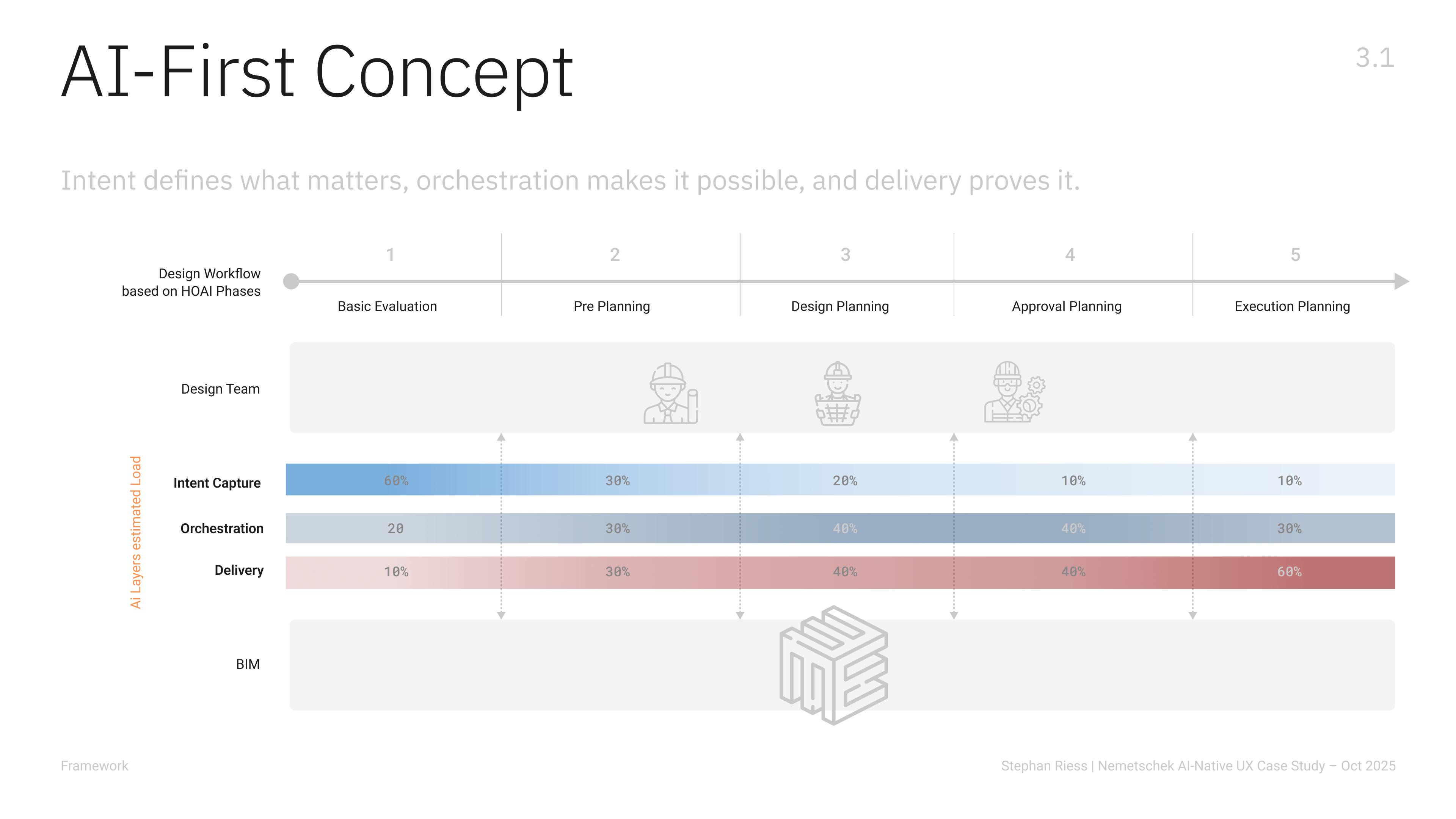
The core of the concept is a three-layer continuous interaction model spanning HOAI lifecycle phases. Intent Capture handles natural language and constraint-based input, structuring people, place, and parameters. Orchestration governs policy-driven AI agents with real-time BIM sync, cross-discipline coordination, and clash avoidance. Delivery ensures decision traceability, auditability, permit readiness, and compliance documentation.
Governance and Architecture
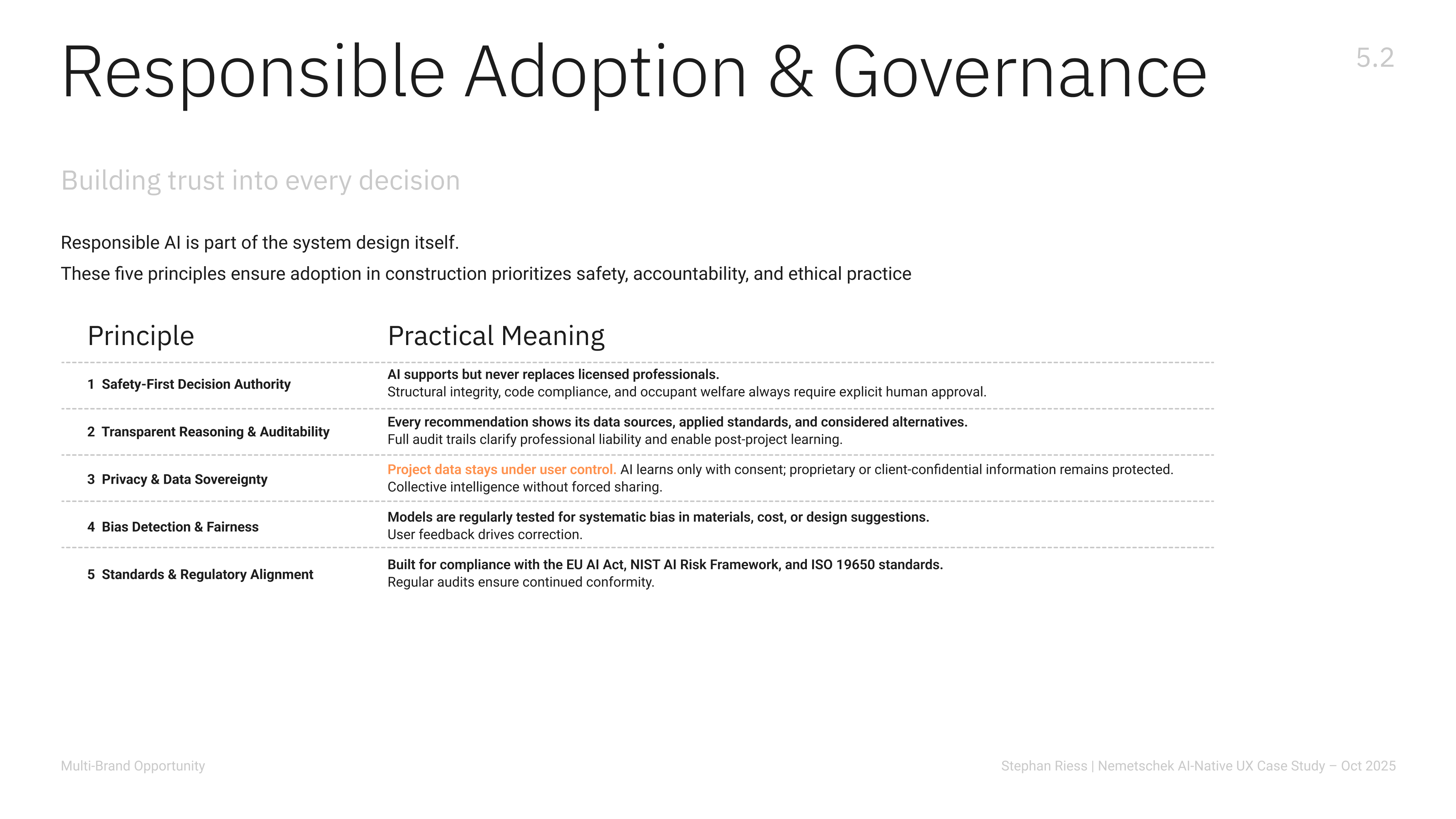
The technical backbone is federated, not centralized. Each brand retains autonomy while sharing a common AI orchestration layer. The framework references the EU AI Act and NIST AI Risk Management Framework. Human-in-the-loop safeguards, model traceability, and enterprise MLOps awareness are incorporated into the interaction framework.
Strategic Vision
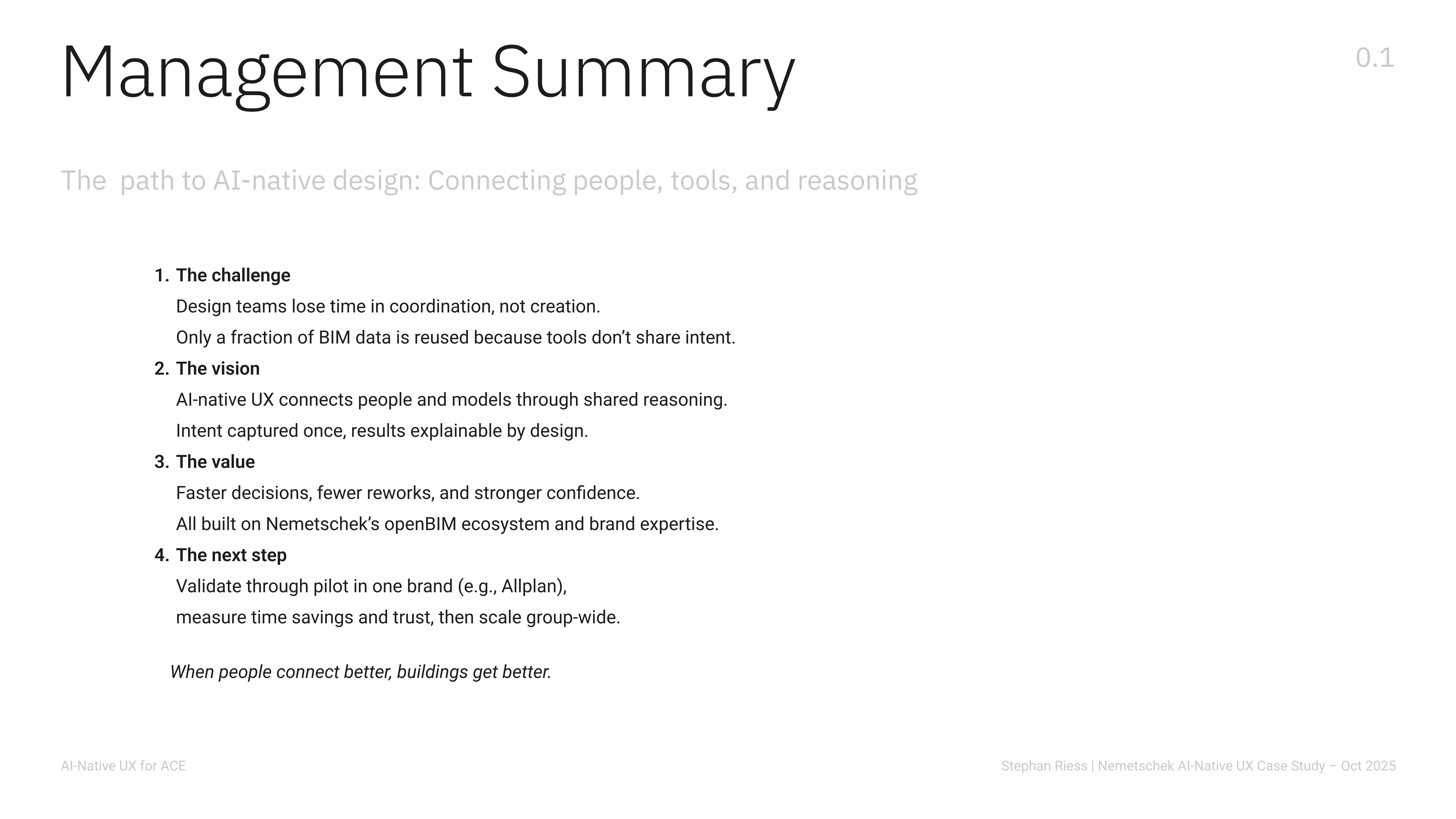
The output was a C-level-ready presentation, framed to communicate across product, engineering, and legal stakeholders. The core argument was that AI governance and UX architecture cannot be separated in enterprise software. The vision frames multi-brand AI integration as a competitive differentiator, with design leadership connecting engineering capability, regulatory constraint, and product experience.
My Role
I led the full strategic concept from problem framing and interaction model design through governance integration and executive presentation. The work was self-initiated for a senior hiring process, which required setting scope and success criteria independently.
Outcome
The concept demonstrates how design leadership can connect engineering capability, regulatory constraint, and product experience in an AI-native enterprise context.